Blogs > Remember When Virtual Museum

Photos and stories about the rich history of The Reporter's coverage area. Readers are encouraged to submit their own stories and photos for this blog and the weekly Remember When feature in The Reporter, which runs on Mondays. Contact us by email at citydesk@thereporteronline.com, or write us at 307 Derstine Avenue, Lansdale, PA 19446 for details.

Monday, December 29, 2008

Snow shots

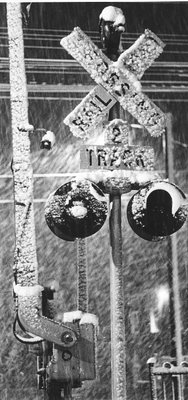
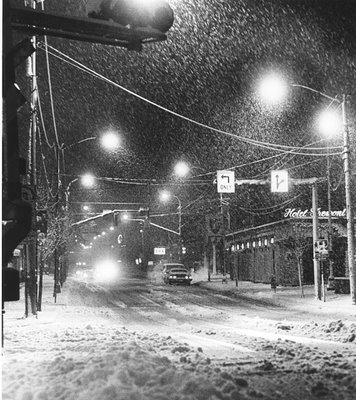
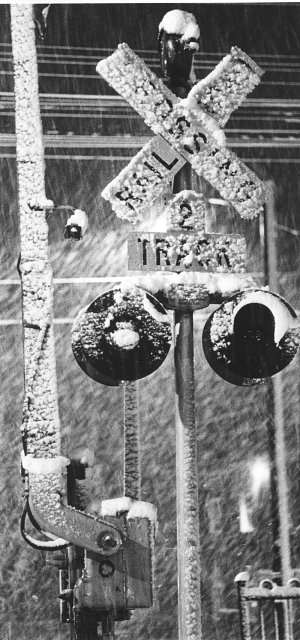
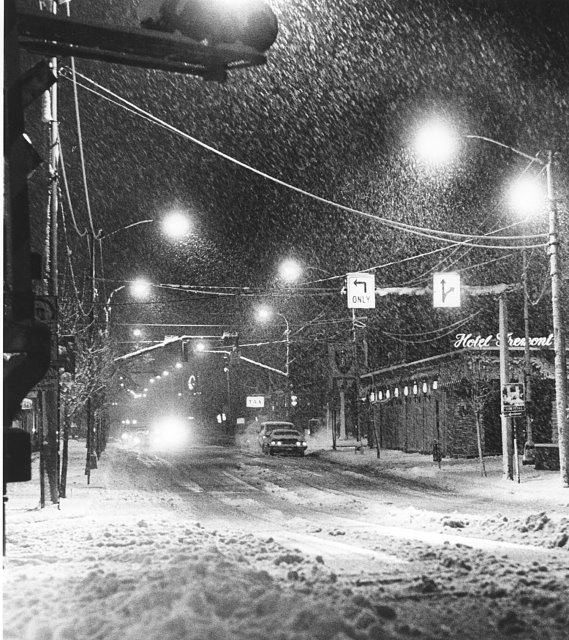
As 2008 draws to a close, we thought we’d pull one of our old “year end” files at random and feature a few photos from days gone by.

The winner — the year 1980.

The two photos featured were snapped by current chief photographer Geoff Patton and are marked as being shot on March 31, 1980, when, quite obviously, we had a little bit of snow here in the region.

The one photo shows a Conrail light stand at Main and Broad streets in Souderton.

The other was shot on Main Street, Lansdale, and not only features the snowstorm, but also the now-departed Hotel Tremont, where the Rite-Aid now stands at Main and Broad.


Let’s hope March 31, 2009, doesn’t bless us with similar weather!

Monday, December 22, 2008

Family time


During the holiday season, we all seem to gather more with family and friends.

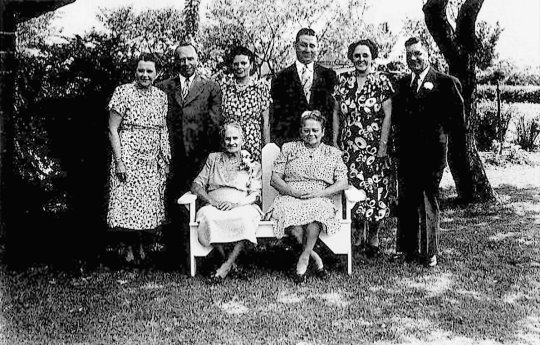
Even though today’s photo wasn’t taken during the winter holidays, it does represent a family gathering.

According to Christine Schuyler, who submitted the photo, “This old family photo dates from the 1940s or 1950s. Pictured on the far right is my husband’s great-aunt and -uncle, the late Edna Mae and Howard Leon Schuyler. They both lived in the Doylestown area and raised five children.

“We have no idea who any of the other people in the photo are, and would love to find out.

“If any readers can identify these people, they can send an e-mail to skies4@verizon.net.”

So how about it, readers? Does anyone look familiar to you?

If so, please contact Schuyler at the above e-mail address.

And happy holidays as you gather with your own family and friends.

Monday, December 8, 2008

On the rails


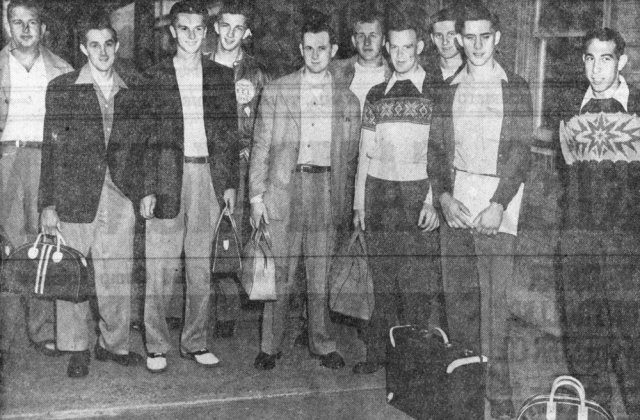
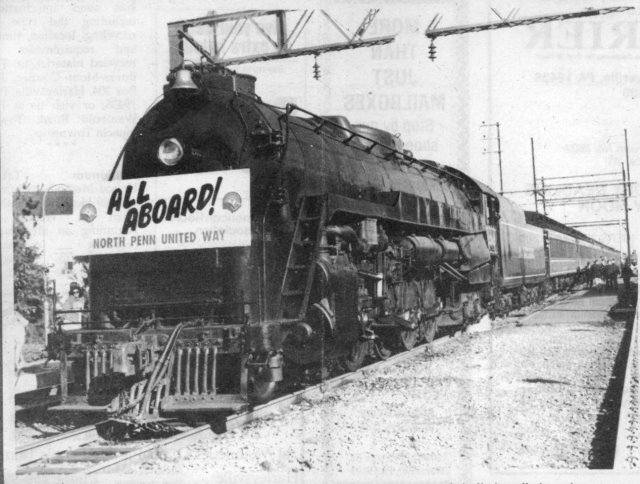
Today we feature two photos that aren’t really related — unless you consider one is a train photo and the other was shot at a train station — but we felt they both were interesting.

The first, submitted by Roland Kerr of Harleysville, shows 10 county draftees leaving for military training, and is dated June 24, 1952. The men are shown at the Norristown train station and the caption noted that they “left for military training on the 7:43 train this morning.”

Kerr’s information indicates:

“These are the men drafted in the Korean War. Left to right are Edward Eisenhaur, Leon Overpeck, Roland Kerr, Arthur Stover, next five unknown, and Mr. Poole on the right.

Perhaps you recognize some of these faces.

The next photo, from a Reporter newspaper clipping:


The person who dropped it off did not leave any contact information and there was no date on the clipping.

The caption notes:

“The queen of the former Reading Railroad, engine 2102, roared, huffed, puffed and sent clouds of steam and smoke into the clear fall air this past weekend as the feature of the North Penn United Way ‘Train Days’ promotion. Number 2102 was on display all day Saturday and on Sunday was called upon once again to pull a trainload of happy passengers from Lansdale to Glenside. Four trips were made on Sunday.”

Moderator's note: This ride was indeed a popular United Way fundraiser, held in 1991. The train was part of the Reading and Blue Mountain excursion line. Local railroad fan John Almeida made a video of the event, which you can see here:

Tuesday, December 2, 2008

The North Wales Minuet

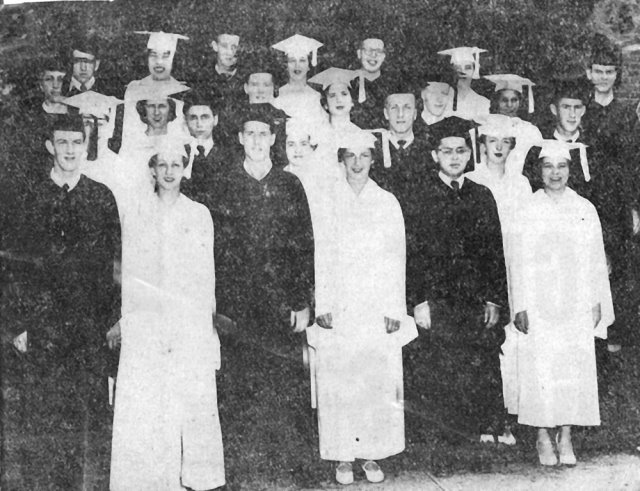
The North Wales High School Class of 1953 recently held its 55-year class reunion at Indian Valley Country Club in Franconia.

They had 26 members in the class and 21 are still living. Of the surviving members, 17 were at the reunion, making a 75 percent attendance record.


Members of the reunion committee were Gerry (Geyer) Nelson, Jay Kratz, Al Ruber, Bob Fredericks, Peggy Fenstermacher and Carole Fredericks.

And the photos featured today show the class at its prime.

In the graduation class photo, the members of the class are shown before taking part in the graduation services that were held in the high school auditorium.

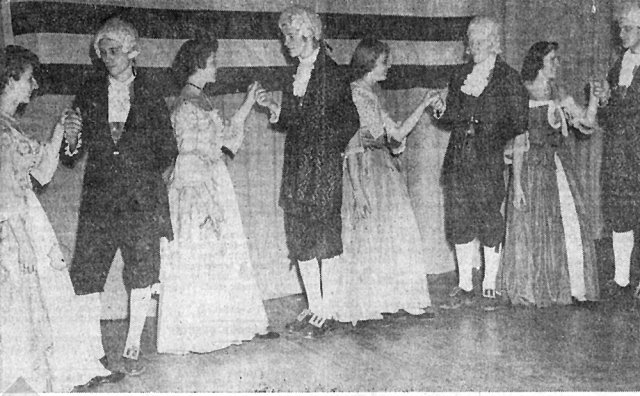
And don’t you just love the students taking part in the minuet, as part of the assembly at the high school?


This photo was featured in The Reporter on Feb. 27, 1953, and shows students performing the minuet at the annual Washington’s Birthday assembly at North Wales High School.

According to the caption, the dance is being performed by Elaine Parvin and Charles Wagner, Gail Adams and Allan Hoffman, Gerry Geyer and Robert Frederick, and Edna Quinn and Wayne Schwartzer.

Bet the guys loved wearing white stockings and wigs!

Monday, November 24, 2008

Mity-Nice


Thanksgiving is looming, and in addition to thinking about things for which we are thankful, our thoughts naturally turn to food.

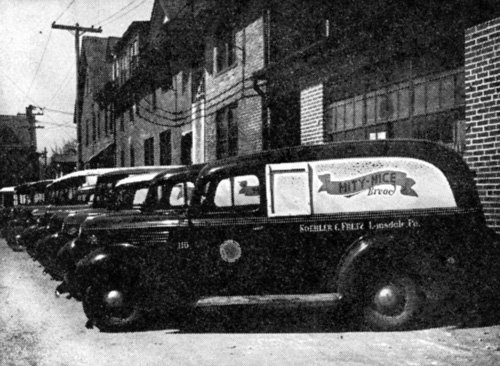
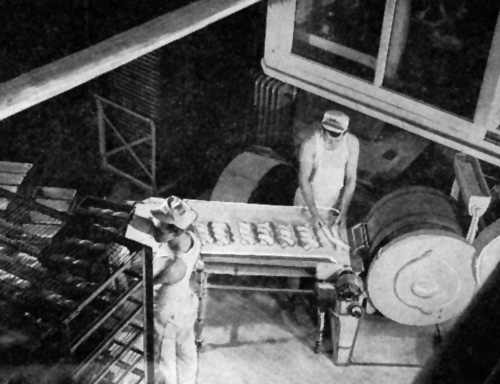
So what better time to take a look at some photos related to the Mity-Nice bakery products that once were produced right here in Lansdale?

Lois Wolf lent The Reporter a small green booklet which apparently was produced in 1939, titled “Your Mity-Nice Bakers,” which related the history of the company, noting that Frederick W. Koehler came to Lansdale from East Greenville in 1894 and started a small bakery.

“Deliveries were first made in a push cart, and the only product was bread ... one sort of bread,” the booklet notes.

Since most of the women in Lansdale baked their own bread, Koehler had to win them over, so he kept up his hard work of making great bread, the booklet noted, and then expanded to add rolls, more varieties of bread, buns, pies and cakes.

“Each product helped the others, because the people were still saying: ‘Koehler’s goods are mighty nice.’”

The name was adopted and coined into Mity-Nice as the trademark.

But in 1919, the plant was destroyed by fire. Instead of giving up, Koehler built a new bakery and, in the fall of 1921, Oscar Fretz entered the business, which became Koehler & Fretz Inc.

The 1939 booklet noted that when the business was incorporated, there were five delivery routes. By 1939, that had grown to 32 routes, covering a 25-mile radius of Lansdale.

Products described in the booklet include Mity-Nice bread, Honey-Meel bread, sandwich bread, Vienna bread, 70 percent whole wheat bread, cracked wheat bread, rye bread, dual bread (half white, half 70 percent whole wheat), cinnamon buns, trolley buns, butter buns, crumb buns, tea rings, snails (“they are a dainty worth trying”), sweet buns, various rolls, pies and cakes.

The booklet also describes how to make various types of sandwiches (“Be sure the bread is Mity-Nice); offers tips for using bread (“To keep sandwiches, pile sandwiches together and lay a damp towel over them); and even includes such recipes as Meat Loaf Pie, Cherry Brown Betty and Quaker Pudding.

So, is your stomach growling yet?

Monday, November 17, 2008

Improvements


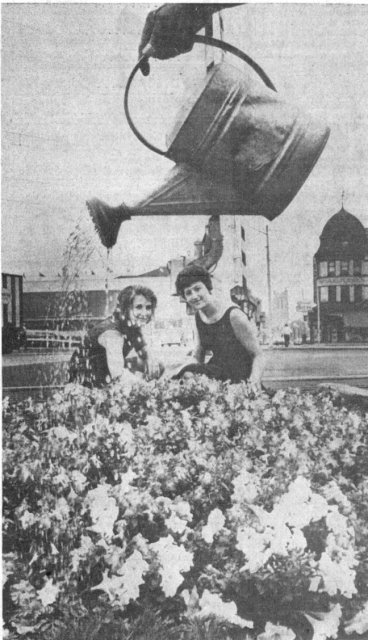
Mary Rose Di Domizio of Lansdale submitted today’s walk down memory lane.

According to Di Domizio, this photo was “snapped in the 1960s. We now belong to the Woman’s Club of Lansdale.”

But back then, it was the Junior Woman’s Club of Lansdale that was planting flowers at the railroad station plaza along Main Street in Lansdale.

According to the caption that accompanied this photo from a newspaper clipping:

“Pleasing to the eye is this bed of petunias and juniper shrubs planted by the Junior Woman’s Club of Lansdale ... Supervising the watering of the club beautification project are Mrs. Gordon Gerhart, garden department chairman, and Mrs. Robert Di Domizio, a member of the committee which planted the triangular bed leased from the Reading Railroad.”

In the story that ran with this photo, it was noted that the plants were placed on May 15, and were either donated by local florists or sold at cost to the club.

The project had been discussed that March with G. Austin Kulp, the clipping notes, of the Lansdale Community Improvement Association.

“The services of Doylestown landscape architect John F. Kennedy were acquired, after a plan was presented to the Reading Railroad and borough council for approval,” the newspaper notes.

Today, Lansdale’s “improvement” projects include the Center for the Performing Arts. But efforts to change the town for the better have never ceased.

Monday, November 10, 2008

Trolley talk


Ready to hop on board a trolley for a trip around Lansdale and its surrounding communities?

Sorry, you can’t do that anymore.

But you can relive those days this Tuesday, during “All Hail the Trolleys!” — the topic of the Lansdale Historical Society’s Community Program.

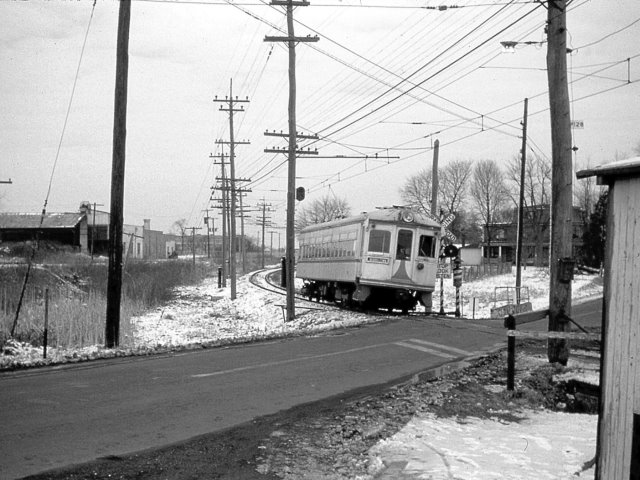
The photo here shows the Liberty Bell Limited trolley, heading southbound crossing West Point Pike just outside West Point village with what is now the Merck complex in the background.

The photo was taken in 1951, shortly before the Philadelphia-to-Allentown route was discontinued and the tracks removed.

The Tuesday show will be presented by Andy Maginnis, Lansdale resident and trolley historian, who is in the process of writing a book on the subject.

Maginnis will trace the quick rise of the trolleys in the North Penn region during the early 1900s and their equally rapid demise in the years after World War II.

He will describe the important role trolleys played in moving passengers and freight to places where trains could not go in an era before cars could be found in every driveway.

The program will include a video presentation of more than 125 images of trolleys, trolley stations and the people who rode or worked on the local lines.

The program begins at 7:30 p.m. Tuesday at the Lansdale Parks and Recreation Building, Seventh Street and Lansdale Avenue. There is no admission charge, but donations are appreciated.

For more information, call (215) 855-1872 or check the society’s Web site, www.lansdalehistory.org for more information.

Check out a video featuring Maginnis that was produced recently for The Reporter's 'Remember When' special section:

Monday, November 3, 2008

More baseball


With the 2008 Phillies World Series win, how about a look at a different World Series?

These photos were submitted by Ellis Kriebel of Harleysville, who noted:

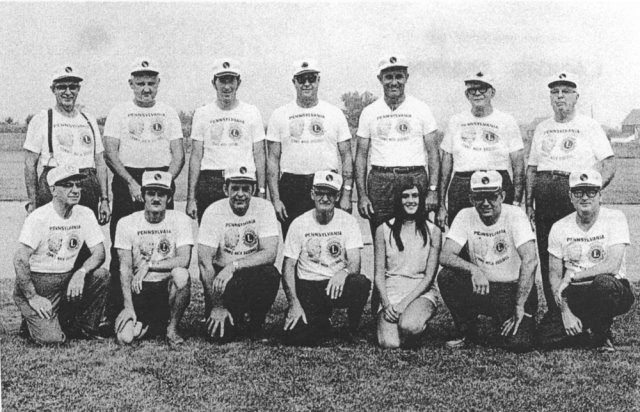
“The Harleysville Lions Club in 1960 took on the responsibility of sponsoring the Connie Mack Knee-Hi Baseball Tournament, with the “World Series” played on the Harleysville diamond.

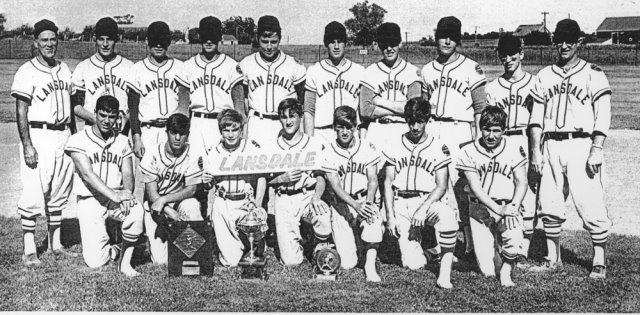
“The 1968 tournament brought together teams from Lansdale, Northampton, Philadelphia, Bethlehem, Myerstown, Kitanning, Sandy Lake and Pittsburgh. After losing the opener to Northampton 5-4, Lansdale won four straight to take the championship by defeating Bethlehem 5-3 before a very large crowd of spectators.

“Coach Ray Cash supplied the picture of the winning team. Members were Ken Brenninger, Jim Flyzil, Larry Fritz, Scott Harmon, Dick Henry, Bob Hollenshead, David Landis, Bob Marschhausen, Doug Mininger, Tom Rhodes, Mario Saldutti, Lee Saverio, Tim Smith, Elmer Stephens, Ron White and Ron Ziegler.

“The Harleysville Lions Club Committee members were, back row, Ralph Wambold, Joe Ball, Larry Palmer, Roy Shade, Don Eschbach, Wayne Krauss and Howard Landes. Front row, Clarence Tyson, Tom McKeeman, Ken Ritter, Lewis Alderfer, Lou Ann Wambold (scorekeeper), Vic Alderfer and Julian Hagin.”

They may not have gone on to become Phillies, but they were champions nonetheless.

Monday, October 27, 2008

World Series champs!


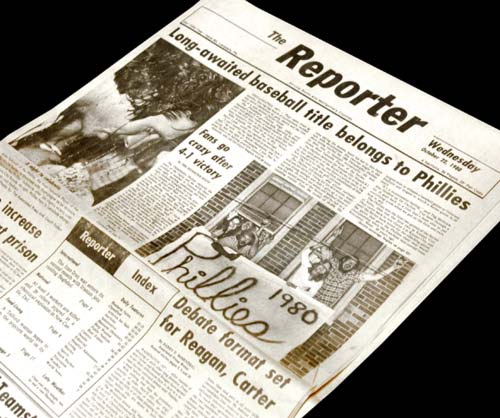
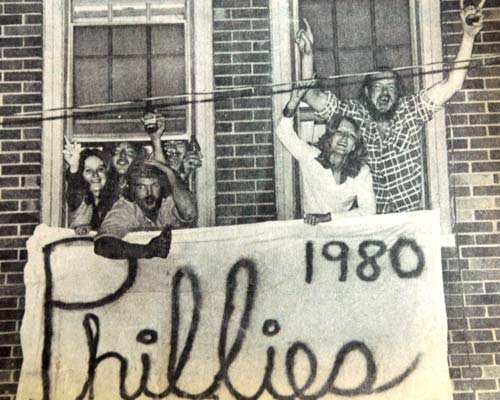
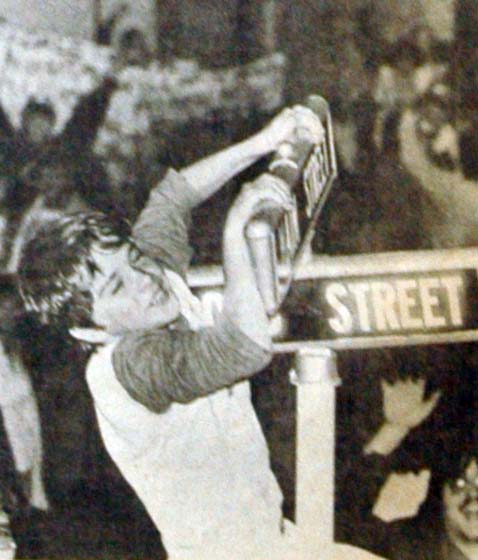
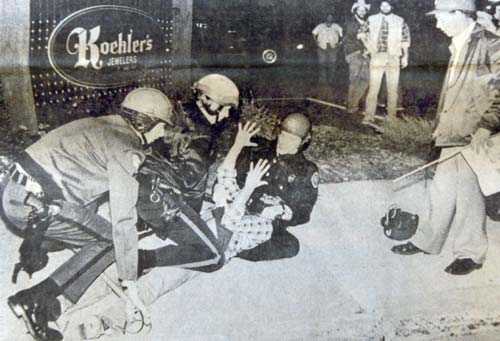
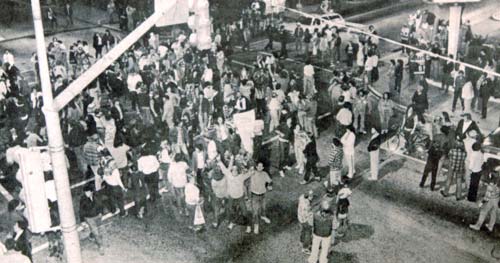
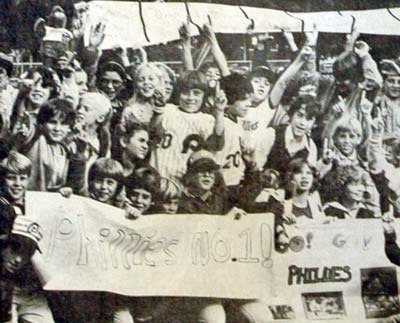
As the Phillies took a 3-1 lead in this year's World Series, this seems like a good time to look back at the last time the Philadelphia saw a baseball championship in 1980. Fans took to the street following the Phils victory over the Royals 4-1 in the sixth game to win the title.
Thanks to Dick Shearer from the Lansdale Historical Society for bringing this copy of the paper out of their archives for us to share.


These photos were taken by Reporter photographers Bob Martin and Geoff Patton. Patton is currently the Chief Photographer at the The Reporter.

According to the Reporter on October 22, 1980, one of the officers injured while subduing revelers was 23-year-old Joseph McGuriman, now Lansdale's police chief.

From the article: "The Philadelphia Phillies captured teh heart of the region and the world championship of baseball at Veterans Stadium last night, sparking celebrations and midnight madness throughtout the area."
"In Lansdale, police blocked off the intersection of Broad and Main Streets to allow residents the luxury of milling aabout the streets, dancing, whooping, crying and paying tribute to the team that brought hime its first world title since the birth of the franchise almost a century ago."
"And this morning nearly half of North Penn High School's student body - 45 percent or more than 1,000 youths - failed to show up for class today as they swarmed to center city Philadelphia for the 11:30 a.m. parade to honor the baseball champions. At the district's junior high schools, 20 percent of the classes were missing but some stduents were appearing late, apparently because they could not get transportation to Philadelphia."

And we now know all about one student who missed classes at Souderton Area High School to watch the parade...Phillies pitcher Jamie Moyer. Hopefully, all is forgiven.


Practice makes perfect


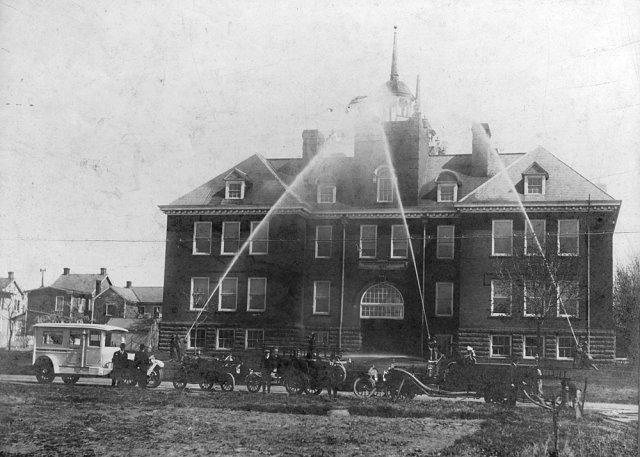
Today’s photo, submitted by Paul Clayton of Lansdale, takes us back to a day when firefighting was quite a bit different.

Since Fire Prevention Week was observed earlier this month, Clayton thought it might be fun to show how the art used to be practiced.

The photo, he said, shows the Fairmount Fire Company of Lansdale practicing at the old Green Street School in town.

He believes the photo was taken sometime in the 1920s or 1930s.

He notes:

“My mother, Erma Weachter, said my grandfather, Hiram Weachter, was president of the fire company at that time. He also was burgess (now known as mayor) of Lansdale.”

We certainly appreciate seeing that our firefighters were just as devoted then as they are now.

Of course now, Jay Daveler and the Fairmount Fire Company have a fleet of equipment that is quite different, and more expansive, than what we see here.

Monday, October 20, 2008

Getting there

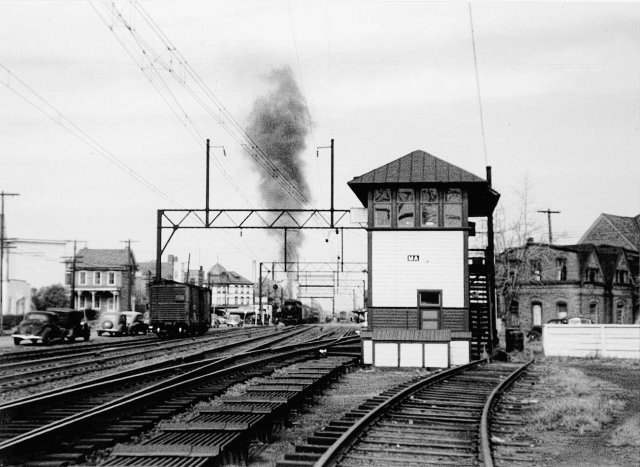
During August, The Reporter printed a special Remember When section that centered on the general theme of transportation.

And today, thanks to Lansdale’s Robert Linden, we have three photos to share with you that harken back to earlier times here in Lansdale.

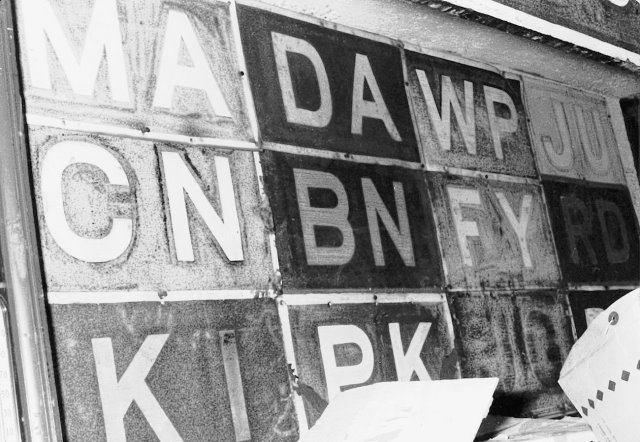
One photo shows the outside of the former Reading Railroad switching tower, and you may note the letters “MA” on the outside of the building. According to Linden, these are telegraph letters; station letters were “DA.”

Off in the distance, you’ll see a locomotive steaming into town.

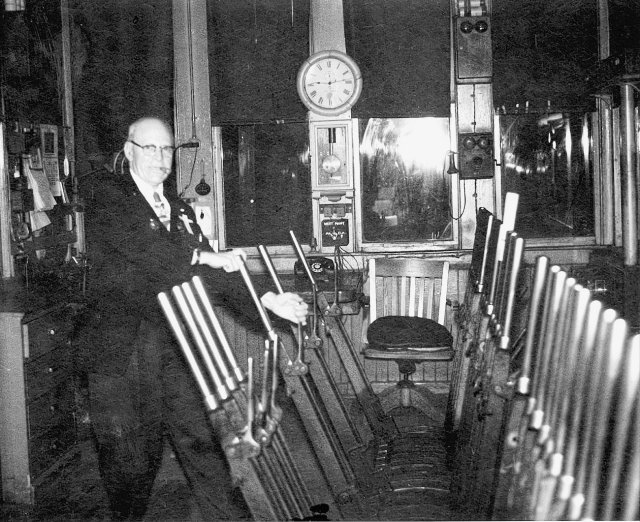
Another photo shows Bill Walters, the tower man, manipulating the big levers inside the tower, which were used to throw the switches in the tracks to properly route the trains.

If you check the clock, you’ll note, as Linden did in the information provided, that it’s 9:13 — a.m., according to Linden.

The other photo shows the large call letters, the same type as the “MA” on the outside of the switching tower.

The call letter signs are part of Linden’s railroad collection.

Monday, October 13, 2008

Boston in Lansdale


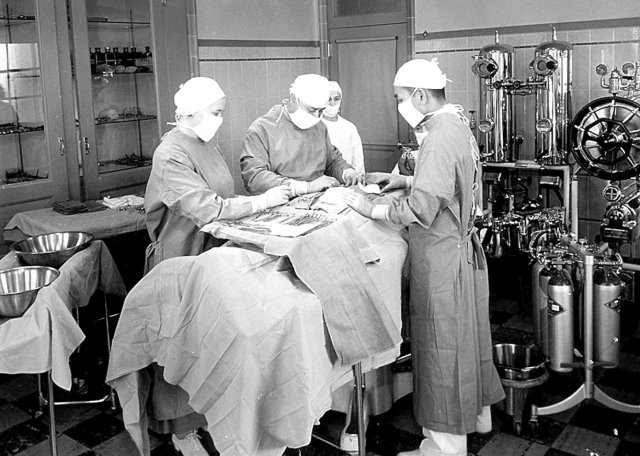
LANSDALE – Dr. Frank Boston, the physician who founded the hospital that today is Central Montgomery Medical Center, found his way to Lansdale in 1931 as the result of a camping trip and a broken leg.

A World War I veteran with a practice in Philadelphia, Boston enjoyed camping on the banks of the Perkiomen Creek, a summer respite from the city’s heat and humidity.

On one of these outings, the doctor was summoned to assist a man from Lansdale who had broken his leg. While treating him, the two began a friendship that eventually led Boston to open an office in the Dresher Arcade building on West Main Street.

It was the beginning of a long, distinguished medical career that led Boston to establish Elm Terrace Hospital and form the Lansdale First Aid Corps, which later became the Volunteer Medical Service Corps.

The life and times of Boston will be the subject of a Lansdale Historical Society Community Program Tuesday at 7:30 p.m. at the Lansdale Parks and Recreation Building, Seventh Street and Lansdale Avenue.

The show, narrated by the society’s Dick Shearer and Steve Moyer, will feature more than 100 images of the doctor, his hospital and the medical corps, which is celebrating its 75th anniversary this year.

“When he first came to Lansdale there’s no question that Boston was looked upon as an outsider, especially by some of the other doctors who probably feared losing business,” Shearer said.

“He stepped very lightly at first, but within three years he had the medical corps up and running and the hospital followed closely behind. In both cases he used his own money – some from his military bonus – to fund the efforts.”

Elm Terrace had a humble beginning. Boston rented, then bought, a house at Seventh and Broad streets and converted it into an 11-bed facility.

Within two years, he purchased another house on the same corner as more and more patients were brought in.

Then in 1941, he sold it to the community so that it could be run as a nonprofit facility. In 1953, it was renamed North Penn Hospital at the start of a major expansion project.

“Most people around here who remember Dr. Boston speak of him in exemplary terms,” Shearer said. “Not only was he considered an outstanding surgeon, but he often gave freely of his expertise, especially to those who needed an operation but could afford it.

“There are countless stories of him performing surgery without compensation or offering other medical services where he would refuse payment. This was especially true during the Depression and immediately after World War II, when money was hard to come by.

“He is said to have operated in dimly lit farmhouses when patients could not be transported. And there are stories of him performing surgery on animals when a veterinarian wasn’t readily available.”

The medical corps was a reflection of his Army experiences. From the very beginning, his Lansdale unit trained with military precision and a loyalty to the unit developed that carried from generation to generation. It was the only emergency and rescue squad of its kind at the time.

For all of his accomplishments there is another side to Boston’s story. Because he had non-Caucasian facial features, it was assumed by some that he was in part African-American.

According to Shearer, Boston speculated that his mother, who came from Canada, was part Native American. Whatever the case, it was cause for rumor and unspoken discrimination in the predominately white North Penn area of that era.

Evidence of this is the monument in his honor placed on the corner of the First Baptist Church Property at Seventh and Broad Sts., where the original hospital once stood.

According to Shearer, after Boston was diagnosed with bone cancer in 1958, a group of his supporters lobbied to have a portrait of him hung in North Penn Hospital.

The board of directors refused and a public fundraising campaign was established to build the memorial across the street, where his detractors had to look at it when they entered or left the hospital.

“Unfortunately, it wasn’t built until after he passed away in 1960,” Shearer added. “But it’s another important chapter of his legacy that is still talked about today.”

Tuesday night’s program is free and open to the public, but donations are appreciated. For more information, call the society at (215) 855-1872.

Monday, October 6, 2008

Think snow


Since we’re just starting autumn, it seems a bit early to be thinking about winter ... and snow.

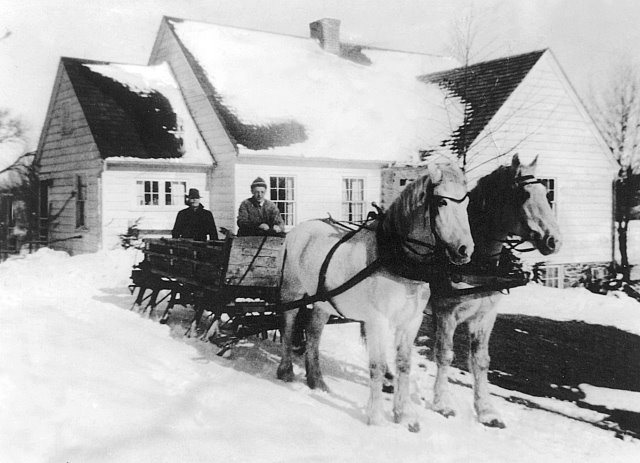
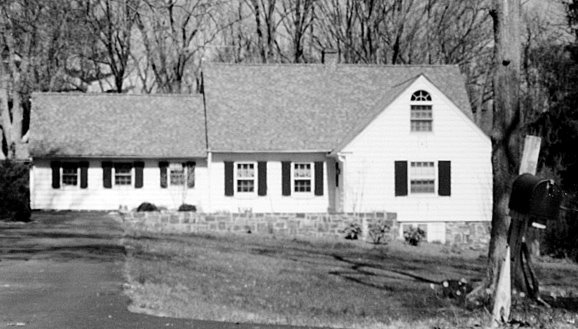
But we thought it would be fun to show you these two photos, submitted by Frank Schlegel of Harleysville, that shows a blizzard of yesteryear and the same house today.

According to Schlegel, the old photo is a picture of him, in the front of the sleigh, and his father, Nicholas Schlegel, a few days after the blizzard of late February 1941.

“The roads were drifted shut and we needed groceries and supplies (kerosene). We were able to drive through the fields with our freight sleigh from our farm on Keeler Road to our neighbors, The Lawers, on Troxel Road, to get their grocery order.” Schlegel said.

“Mrs. Lawer took this picture,” Schlegel said. “The second picture is the same house today.”


OK, we’re not ready for a blizzard, or any snow, just yet.

But it’s interesting to see how they got around in this area during the blizzard of 1941.

Monday, September 29, 2008

Lansdale grocery


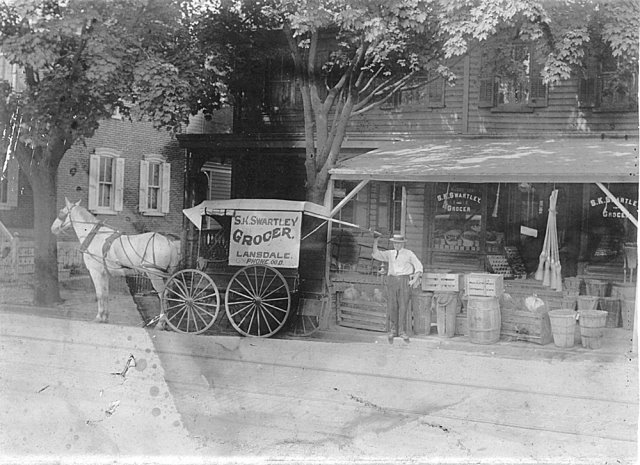
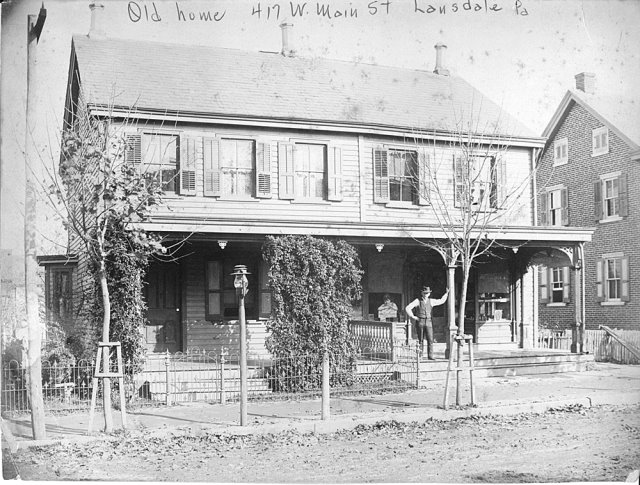
The name of Samuel K. Swartley was once a household name in Lansdale and the surrounding area; in fact, all the way down to Philadelphia.
In these photos, we see Swartley, posing with his grocer’s horse and wagon and also standing on the porch of his house/store.


According to Grace Sayer of Salford, the granddaughter of Swartley, these photos are of the home owned by Swartley, with one side of the house having been transformed into a grocery store at 417 W. Main St., Lansdale.
Sayer said the timeframe was the late 1800s and early 1900s, when the store was in operation.
Swartley would travel to Philadelphia in his horse-drawn wagon to buy meat, she said, and it was an all-day enterprise.
The horse certainly looks like a noble steed, and you can see various items for sale in front of the store.

Quite a difference from the supermarkets of this age.


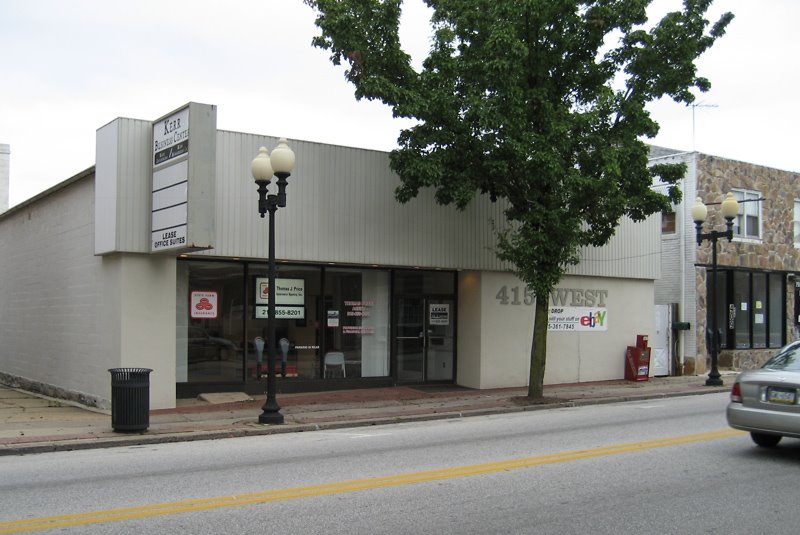
The site as it appears today

Monday, September 22, 2008

Reunion

The North Penn High School Class of 1958 held its 50th reunion this past weekend, with events that included a meet and greet on Friday, tour of the school and dinner event on Saturday and a brunch on Sunday.


Guess they had a lot to catch up on after 50 years!

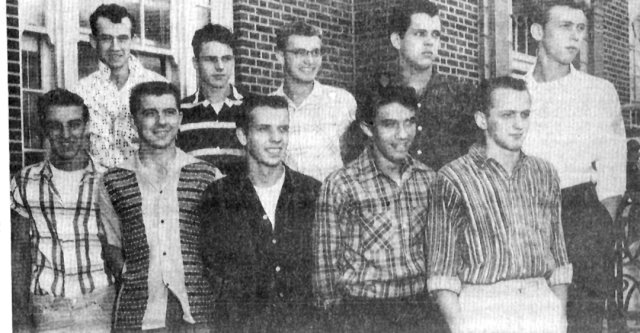
As part of the celebration Marti Drumheller, who helped organize the event, also shared this photo with us, showing 10 young men — several of whom were members of the Class of 1958 — who were leaving for eight weeks of basic training.

According to Drumheller, the young men had decided to join the Army. All had basic training at Fort Dix, N.J., and then went their separate ways.

All nine from North Penn later survived Vietnam, she said, and are still alive today, although they settled from one end of the country to the other, according to Drumheller, and also out of the country.

In the photo, you see 10 young men, identified as, front row from left, Larry Sellers of Kulpsville; James Devine of Souderton R.D. 1; Jay Schaffer of Lansdale; Donald Kratz of Hatfield; and David Race of Lansdale. In back row, Fred Lindahl of North Wales; Samuel Gerhart of Hatfield; John Landis of Lansdale; Herbert Victor of Lansdale R.D. 1; and Ray Stock Jr. of Souderton.

Of those from the Class of 1958, five planned to attend the reunion: Larry Sellers of Hilltown; Jay Schaffer of Florida; Donald Kratz of Hatfield; David Race of Florida; and Fred Lindahl of Germany.

Unable to attend the reunion were Samuel Gerhart of Florida; John Landis of Arizona; Herbert Victor of California; and Raymond Stock of Hilltown.

Thanks, Marti, for sharing the memories.

Monday, September 15, 2008

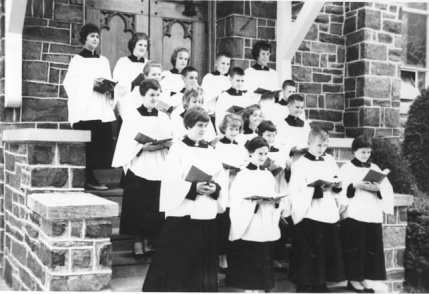
Song of praise


Christ Lutheran Church on Sumneytown Pike, Kulpsville, is nearing the end of its 175th anniversary year, so it’s the perfect time to take another look at the past.
This photo was submitted by Roy Overholtzer, and as he notes, the church has seen hundreds of musicians in its choir loft over the years.
Among the highlights have been the many junior choirs, he said, and this photo at the church door is of one of them.
It should jog quite a few 1961 musical memories, he said.
“But where’s the director?” he wrote. “Probably behind the lens.”
The young singers are identified as:
Top row: Linda Coughnauer, Nancy Metz, Karen Miller, Allen Harper and Ruby Bossert.
Second row from top: Nancy Mellor, Ron Schatz, Jim Godshall and Jack Godshall.
Third row from top: Karen Pfister, Karen Bowman, an unidentified person and Tom Landis.
Fourth row from top: Nancy Pfister, Gloria Schwoyer, Chris Lutz.
Front row: Betty Reese, Dennis Spiess and Kathy Reese.
Perhaps you were one of these young musicians or know one of them. They all certainly look happy to be a part of the music program at the church.

Tuesday, September 9, 2008

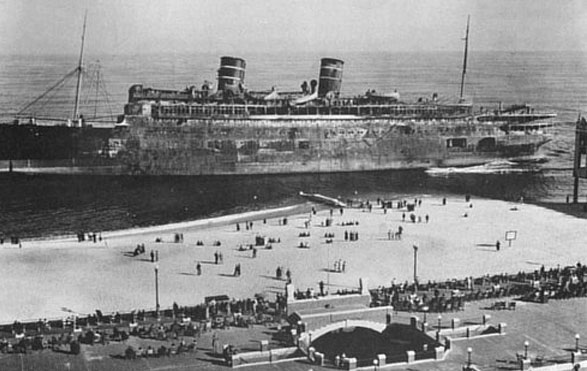
Tragedy in Asbury Park

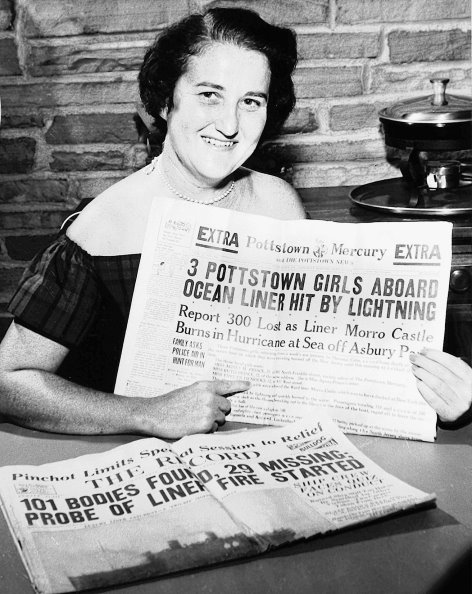
Here is a local take on the 1934 Morro Castle shipwreck tragedy that appeared in our sister paper, The Mercury in Pottstown.
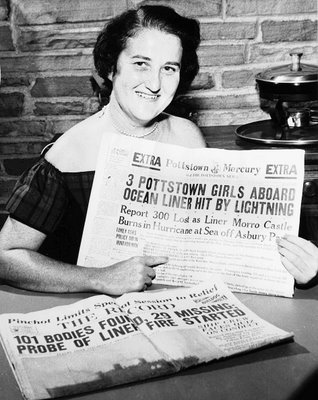

By Michael T. Snyder, Special to The Mercury

When Mercury readers unfolded their morning papers on Sept. 8, 1934, a headline in two-inch type screamed the news: "3 POTTSTOWN GIRLS ABOARD OCEAN LINER HIT BY LIGHTNING."
A secondary headline told more. "Report 300 Lost as Liner Morro Castle Burns in Hurricane at Sea off Asbury Park."
News stories about the destruction of the ship dominated the paper's front page for the next four days as The Mercury chronicled one the greatest disasters in American maritime history.
The Morro Castle was built for the Ward Line by the Newport News Shipbuilding and Drydock Co. at a cost of $4.35 million. Constructed between July 1929 and March 1930, it was the ultimate in luxury, speed and safety. At 508 feet in length and 70 feet in width, the liner's five decks accommodated a maximum of 530 passengers and its 220-man crew.
Its 16 suites were posh and the 142 cabins were just slightly off that mark. The liner's formal rooms were - to the middle class people that made up the vast percentage of its passengers - designed and furnished with jaw-dropping elegance.
A Renaissance theme dominated one room, Louis XVI another. Rich wood paneling was used throughout, and ceilings overhead were painted with elaborate murals.
Sparkling gold fixtures cast light in a dining room furnished with plush upholstered chairs and linen-draped tables. Food and beverages - abundant and of the highest quality - were served by waiters in starched white coats.
Young, attractive entertainment directors supervised shipboard activities, and an orchestra provided music for dancing.
Because of the competition among cruise ships sailing from New York City, the ticket price for all this luxury in 1934 was as little as $65 per person. But Ward Line's owners could afford to offer low rates. The Morro Castle made most of its profit by carrying cargo and from a federal contract that paid $750,000 for transporting mail to and from Havana, Cuba.
The mail contract brought with it the need for speed, and the ship's architect made sure the Morro Castle could fly, equipping it with two electric engines that could move its bulk through the choppy waters of the Atlantic at 21 knots per hour - almost 24 miles per hour.
In the wake of the Titanic sinking in 1912 and other maritime disasters, the Morro Castle had many safety features, among them a fire detecting system - which unfortunately did not safeguard the ship's public rooms. The ship carried 12 lifeboats and 12 balsa floats with a combined capacity of 816 people. In fact, the Morro Castle was so well-equipped that Marine Engineering magazine considered it the "safest (ship) afloat."

Luxury liner cruises toward Cuba

At 4 p.m. on Saturday, Sept. 1, the Morro Castle pulled away from its dock on the East River at the foot of Wall Street, carrying 259 passengers and a 231-man crew bound for Havana.
Among the passengers were James and Madeline Drummond, who were married that morning in Philadelphia. The newlyweds took a train to New York in time to board their honeymoon ship.
When she walked to the altar that morning, Mrs. Drummond was 28-year-old Madeline Claire Finn, a Philadelphia resident born and raised in Pottstown. She graduated from St. Aloysius Commercial School, probably in 1921-22, and by 1930 was living in Philadelphia where she worked as a stenographer.
Pottstown residents Agnes and Ruth Prince and Evelyn Henricks were also aboard the Morro Castle that afternoon. Twenty-eight-year-old Agnes, the society editor of The Pottstown Mercury, and her 22-year-old sister, Ruth, were daughters of the late Harry Prince and his widow, Lena Schlossberg Prince.
Their friend Evelyn was the 22-year-old daughter of Willis Henricks, the owner of the Henricks Pretzel Co. Her father paid for her trip as a bribe to entice her to stop smoking.
The Morro Castle sailed smoothly south along the eastern coast of the United States, rounded the tip of the Florida peninsula and docked at Havana early on the morning of Sept. 4.
At 5:15 the next evening, the Morro Castle, with 59 additional passengers who boarded in Havana, began the return trip to New York. The northern leg of the journey went according to plan until the evening of Sept. 7. It was then that the ship's captain, Robert R. Willmott, was found dead in his bathroom. Command of the vessel passed to William Warms, the Morro Castle's chief officer.

Festive mood turns to fear

Though Capt. Willmott's death prompted cancellation of the formal dinner scheduled for that evening, many small, impromptu parties got under way as passengers set out to enjoy their last night on board the ship.
By 2 a.m., most of the revelers had gone back to their cabins to get some rest before the ship docked. About 2:45, on the ship's B deck, a passenger reported a strong smell of smoke to a crew member. The odor was tracked to a small storage locker in the writing room on the port (left) side of the ship. The crewman opened the door to searing heat and a burst of blue-white flames.
In the chain of events that rapidly unfolded, it seems as if fate had stacked the deck against the Morro Castle's passengers.
The first reports that reached the acting captain were misleading, and it was assumed the fire was small. General quarters was not sounded; the crew was not mobilized. There was no coordinated effort to warn passengers. Many of the ship's fire hydrants were capped, making them non-functioning.
To make matters worse, the Morro Castle was moving at near full speed into the teeth of a nor'easter with winds blowing at 20 mph. The wind "frenzied the flames," Agnes Prince wrote, and it spread rapidly.
Within 15 minutes of its discovery, the fire had spread across the width of B deck, blocking access to the stairway that led to A deck where the lifeboats were positioned.

Panic grips weary passengers

It was about 3 a.m. when Agnes and Ruth Prince went to bed in their cabin on D deck. Shortly after retiring, the sisters - Agnes wrote the day after the fire - "smelled smoke." Alarmed, she called the operator and was told there was a fire, but it wasn't known if it was serious.
The Princes donned their coats and life jackets, left their room and "ran through the smoke to the stairway in the forepart of the ship with the idea of reaching the lifeboats." However, when they reached the staircase "huge flames" that were "already leaping high" blocked their way.
Moving back along the corridor, the sisters were still able to climb to A deck by the aft stairway. But they were forced to retreat again because A deck was "in flames and many of the lifeboats burning."
Chaos reigned in the corridors of the decks below. There was no organized effort to aid the passengers. They sensed they were trapped, and the fire's heat and thick, black smoke spread fear and panic. Prince saw people "on their knees praying" and "mothers with little ones at home, hysterical with the thought of leaving them forever."
Eventually, the fire drove most of the passengers and some of the crew to the promenade decks at the rear of the ship. Their backs were literally to the rail and the flames kept coming. With power lines incinerated, the ship was in total darkness. Men and women who danced and laughed just an hour before choked on the heavy smoke, and the metal decks were hot beneath their feet.

Local women leap into raging sea

The storm-driven rain pounded the hapless passengers, and 20 or 30 feet below the railing the wind whipped the Atlantic into 15- to 20-foot waves.
By 4 a.m. the crew had lowered the few lifeboats that escaped the flames and, carrying just a handful of passengers, rowed away from the ship. Stranded and left to survive on their own, many, including the Prince sisters, decided to jump overboard.
"We knew there was no chance for us on board," Agnes later wrote.
Ruth was the first over the side and Agnes followed with the "feeling of going down, down, down" and the "dread of wondering what in the world was going to happen."
The Princes made their leap from D deck, which was about 20 feet above the waterline. If the ship was at the crest of a wave, the sisters would have fallen another 15 feet or so, traveling about 30 miles an hour when they hit the water.
Some passengers were killed by the very lifejackets that should have saved them. Having never been shown the proper way to put on the lifejackets, they put them on backwards, with the heavy collars in the front. The force of their entry into the waves drove the collars into their jaws, snapped back their heads and broke their necks.
Eventually there were hundreds of people in the water. They escaped the flames but a long ordeal lay ahead of them.
The water temperature was a chilling 70 degrees, too cold for a long immersion. Large waves made many people seasick, and it was difficult for the survivors to breathe without swallowing salt water. After hours in the water, one passenger, a man whose lungs were filled with sea water, gasped to his 18-year-old- daughter, "I give up, I give up," and then died.

Rescue efforts hampered by stormA distress signal was sent by the ship's crew, but not immediately, so it wasn't until about 4:30 a.m. that the first rescue vessel reached the scene. The height of the waves made the rescue effort treacherous, and it was difficult to spot people in the water.
Evelyn Henricks also went over the side of the fiery Morro Castle and joined a small group of bobbing figures. After they had been in the water three hours, Evelyn spotted a "Coast Guard boat heading toward our bedraggled group of people."
The boat picked up Henricks and the survivors with her and took them to a freighter that was assisting with the rescue. When the ship docked in Brooklyn she was met by her sister-in-law's father, who drove her to his cottage at Cedar Lake, N.J. From there, Henricks' brother drove her back to Pottstown.
Agnes and Ruth Prince were in the water for more than six hours before they were rescued. At first the sisters were separated, and Agnes was "too dazed by the horror of it all to call for Ruthie." Eventually she heard Ruth calling her name, but they remained separated until near dawn.
Agnes wrote, "Others began joining us and we all kept together."
When the sky lightened, the weary, cold survivors could see several boats picking up Morro Castle passengers, but the height of the waves made it difficult to attract the attention of rescuers. They were nearly exhausted when they were picked up by the Paramount, a fishing boat captained by John Bogan of Brielle, N.J.
The story of newlyweds Joseph and Madeline Drummond also had a happy ending. The Drummonds were admitted to St. Vincent's Hospital in New York City, suffering from shock, exposure and exhaustion. But according to The Mercury they soon recovered, and from their adjoining hospital beds "laughed as they discussed their harrowing experience."
Madeline's mother, Margaret Finn, took the news of the rescue very calmly, commenting to the paper, "I felt all the time a Finn would not go beneath the water."

Mystery haunts aftermath of tragedy

The women from Pottstown survived. Agnes and Ruth Prince and Evelyn Henricks eventually married, raised families, and lived long lives. Madeline Drummond presumably returned to Philadelphia with her new husband, but research revealed nothing of her later years.
For 134 passengers on the Morro Castle - men, women and children - life ended on Sept. 8, 1934. The tragedy sparked an FBI investigation, and several of the ship's officers and the Ward Line's president were sentenced to prison. Their convictions were later overturned on appeal.
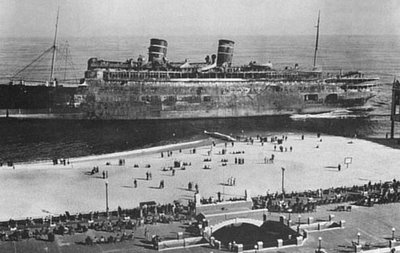

At least one question remains unanswered. How did the fire start?
Officially, it was deemed an accident, but many at the time believed it was arson. FBI documents made public in the 1980s now leave little doubt that the fire was deliberately set.
Some historians theorize the Ward Line orchestrated the tragedy to collect insurance money and hired George Rogers, the ship's chief radio operator, to start the blaze. Rogers was capable of such a deed. A psychopath with a criminal record, he was later sent to prison for trying to blow up a Bayonne, N.J. police officer. After his release, he murdered two of his neighbors and was sentenced to life in prison.
Other historians believe the fire was set by Cuban terrorists in retaliation for the Morro Castle's providing refuge for men the Cuban revolutionaries were trying to capture.
The Morro Castle tragedy has captured the interest of many researchers and authors, so a wealth of material is available. The most recent book, "When the Dancing Stopped" by Brian Hicks, is an excellent account. Online, an interesting site is Gare Maritime; clicking "articles" will lead to two fine studies by James Kalafus.

Monday, September 8, 2008

Before 'FORE!'


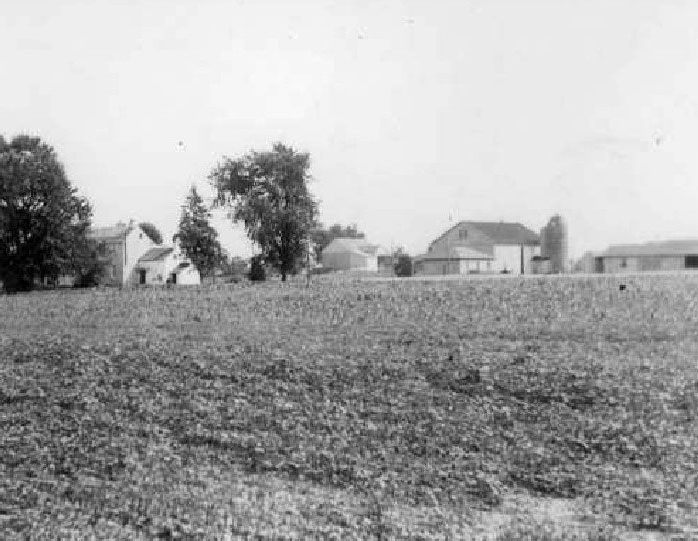
Area golfers who enjoy hitting the links may or may not recognize these photos as a place they now frequent: Twin Woods Golf Course.
We feature today two photos, from obviously very different seasons, at what had been the Corvolth family farm.

One shows the farm in winter; the other appears to be a summer scene, judging by the trees and vegetation in the field.
Now instead of producing crops, the site is home to the golf course, at 2924 E. Orvilla Road, Hatfield.
The present-day course has been family-owned since 1962.

Tuesday, September 2, 2008

A first car

Last Wednesday, The Reporter produced the special section, “Remember When: The Transportation Revolution.”
We had asked the public to send us photos and memories, and unfortunately this photo made it to our offices too late to publish.
But we wanted to share it with you today. It was submitted by Ellis Kriebel of Harleysville.
Here is his tale:

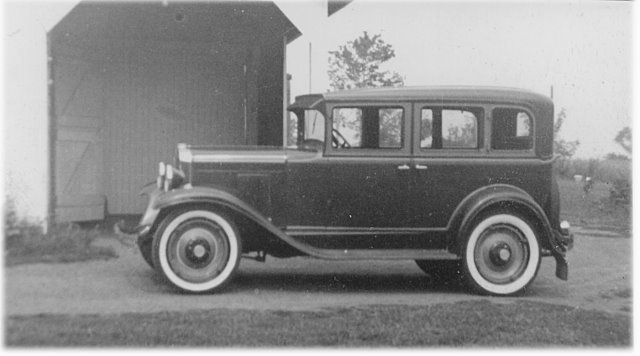
“Here is a picture of my first car, not new but used. This 1929 Chevrolet had the first 6-cylinder engine and was the first model with the long, sweeping front fenders.
“The car was two-tone green with black fenders. Not standard equipment were the white sidewalls and the back-up light.
“Inside I installed a Delco radio and a manifold heater. It was a fun car to drive, with a top speed of 65 mph — downhill — with the wind.
“I sold it in 1946 for $100.”
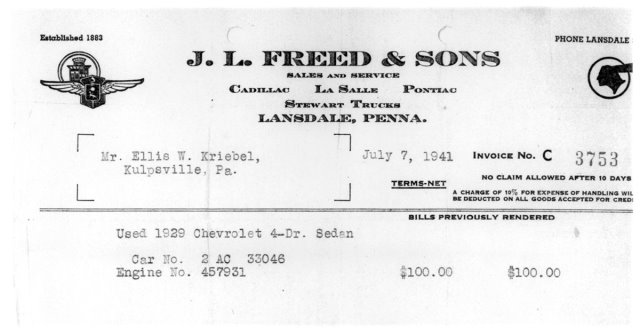
This was the same amount that he paid for it just five years prior, before World War II.
As you can see from the copy of this sale, Kriebel purchased the used car from J.L. Freed & Sons in Lansdale on July 7, 1941.

Monday, August 25, 2008

Getting around

This coming Wednesday, The Reporter will publish a special section titled “Remember When ... Looking Back at the Transportation Revolution.”
So we thought it would be fun, as a precursor to Wednesday’s special section, to feature another form of transportation.
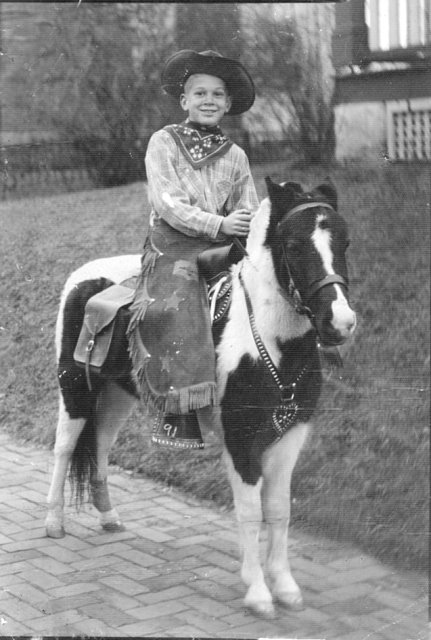
These photos, submitted by Dan Albright, both spotlight a beloved mode of travel, the horse. Well, in one case, a pony.


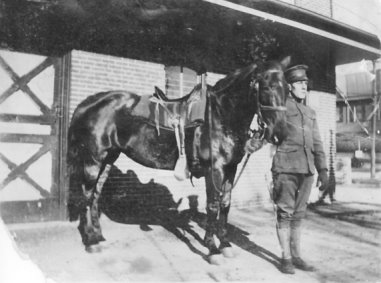
The shot with the horse features Horace F. Weachter, who was Lansdale’s streets and park supervisor. Albright said it probably was taken in the 1930s, and that the photo most likely was taken on Railroad Avenue, near Main Street, Lansdale.


The other photo shows Robert Albright, who then lived on Woodland Drive in Lansdale.
It was taken about 1948, and Albright said the photographer would come to grade schools and homes in Lansdale and take pictures featuring children on the pony with, obviously, the hope that parents would then buy the photos.
So now we hope you all are primed for Wednesday’s special section, filled with stories and photos that will help you “remember when...”

Tuesday, August 19, 2008

Lansdale athletes

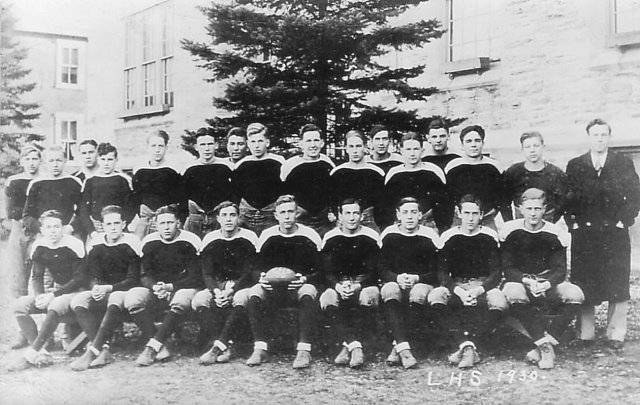
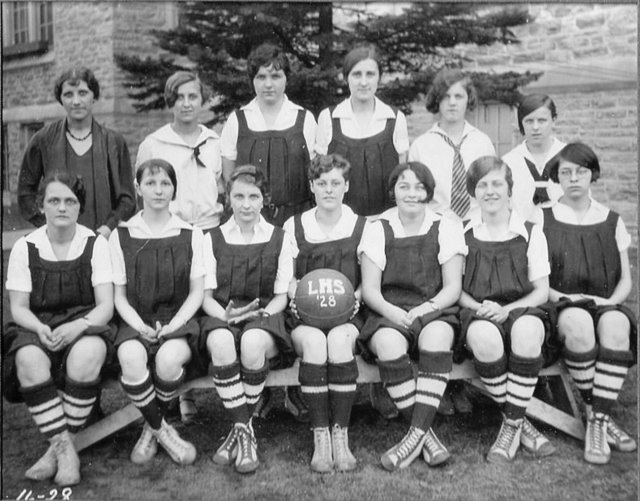
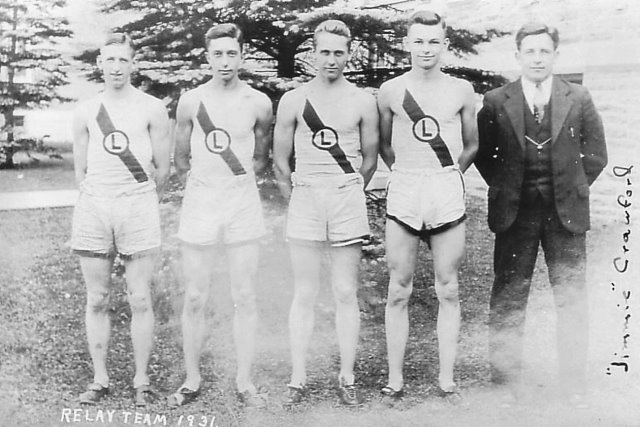
With the Olympics grabbing so much attention these days, we thought it would be fun to show you some photos of several local sports teams from years gone by.
These photos were submitted by John Telencho of Upper Gwynedd, who noted that he had bought the photos recently at an auction and really had no further information on them, other than what was marked on the pictures themselves.
But they are great shots of some local athletes, and include the Lansdale High School football team from 1930:

the Lansdale High School girls basketball team from 1928:

and the Lansdale High School relay team from 1931, a photo that also bears the note of “Jimmie” Crawford, well known to local athletes.

They may not have made it to the Olympics, but these athletes obviously have earned their place in history.
Thanks, John, for sharing these great snapshots of an earlier athletic age.

Monday, August 11, 2008

In the Old Pool

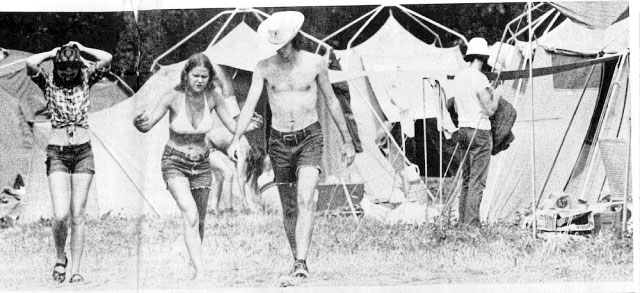
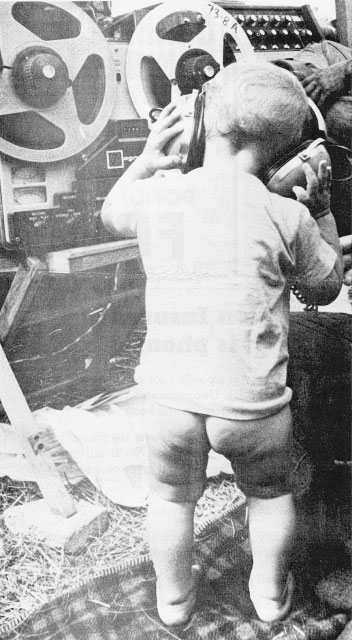
It was 35 years ago...And this weekend the scene will replay, at least to some extent, as the Philadelphia Folk Festival takes up residence in Upper Salford at the Old Pool Farm.These shots were taken in 1973 and appeared in The Reporter on Aug. 31 of that year, but people attending the Folk Festival this year may attest that the scenes are quite similar.Take, for example, the photo of the festival-goers walking away from the camping area in their shorts, skimpy tops or, in the case of the man, no tops.The photo of the infant is a bit of a standout, however. Apparently this kid didn’t hear the rule about “bottoms must be worn.”And it is a kick to see the old-fashioned tape-recording equipment and those huge earphones.

We wonder if this kid is now an adult festival-goer.The Philadelphia Folk Festival kicks into gear this Friday in Upper Salford and runs through Sunday, with the usual eclectic mix of performers, workshops, food and crafters.And, we’re sure, everyone will be hoping for cool, dry weather.Unless they’ve forgotten their pants, that is.

Monday, August 4, 2008

Cow celebs


Since the Montgomery Country 4-H Fair is coming up this Thursday, Friday and Saturday, we thought we’d dip back into our archives and see what was going on at the fair in, say, 1974.
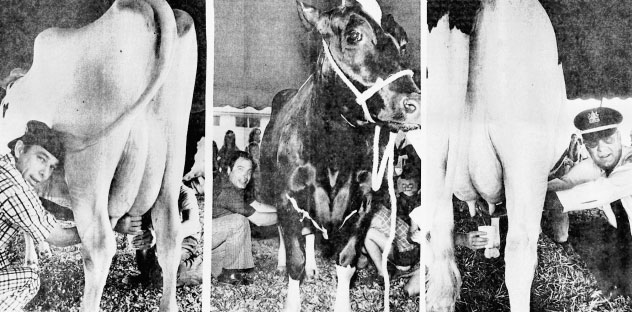
As these photos show, some of our local “personalities” were busy at the celebrity cow-milking contest.
Shown in the photos, from left, are winner Dick Heist, who was program director of radio station WNPV (maybe it was his snappy outfit that helped him win); second-place finisher Willard Krieble, who was chief photographer for The Reporter at the time (nice pants, Bill); and Wallace S. Hendricks, who was Lansdale’s police chief and, according to the caption information published in 1974, “experienced udder failure.” Hey, at least he dressed professionally for the contest!
Ah, those were the days.
Alas, it doesn’t look like there is a cow-milking contest in the fair’s present form.
But you can still experience other fun at the 4-H Fair starting Thursday evening, which is held at the 4-H Center on Route 113, Skippack Township.
The fair runs Thursday from 6:30 to 9:30 p.m., with highlights that include opening ceremonies, pony rides, horse-drawn hayrides, animal costume class, swine judging, cat show, and honoring of outstanding 4-H members.
Friday’s hours are 9:30 a.m. to 9:30 p.m. and events include shows of dairy animals, poultry, rabbits, pygmy goats and beef cattle, a 4-H Seeing Eye Puppy presentation, pony rides, the cooking of the World’s Largest Sausage Patty at 6 p.m., courtesy of Hatfield Quality Meats, the Daisy Jug Band at 6:30 p.m. and a baking contest.
Saturday’s hours are 9:30 a.m. to 4 p.m. and events include quilting demonstrations, an Equine Parade of Breeds, a model rocket launch at 12:15 p.m., fashion revue, pony rides and the annual pet show at 1:30 p.m., which is open to the public.
Admission to the fair is free, but there is a $5 parking donation. Sales of food and crafts are at extra cost.
A list of fair events can be found online at http://montgomery.extension.psu.edu or by calling the 4-H office at (610) 489-4315.

Monday, July 28, 2008

Hot enough for ya?


We’ve all been complaining about the heat and humidity lately. But, as we all know, it’s July and this is what we can expect.
And 30 years ago, the region was sweltering away as well.
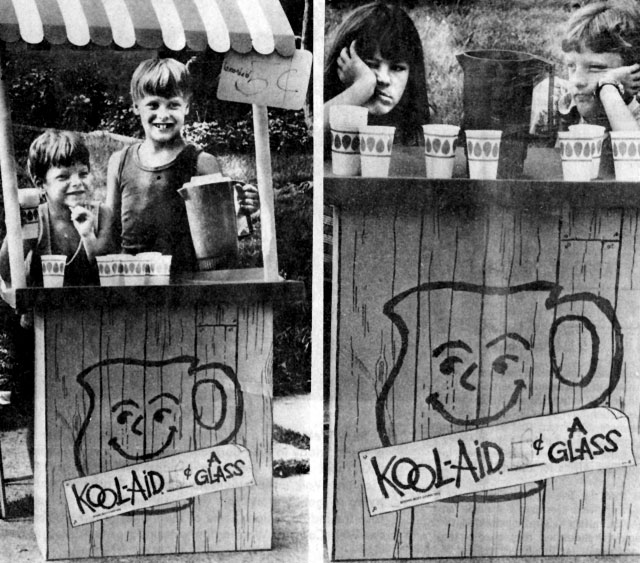
Glenda Moyer of Lansdale has submitted these photos that ran in the July 22, 1978, edition of The Reporter — well, it was named the North Penn Reporter back then — and they show that it was hot then, too.
The information that ran with the “Kool-Aid Kids” photos noted:
“Even a cold drink brings little relief from the muggy weather, as these youngsters found yesterday. The brothers and sisters opened competing cold drink stands on the corners of Derstine and Cannon avenues, Lansdale, but sales weren’t booming.
The information accompanying the top photo said, “At left, Shawn Moyer, 5, and his brother Steve, 8 of Columbia Avenue, wait for business.
“In photo at right, their sister Yvonne, 9, at right, and her friend, Julie Lichty, look grim as they await some hot weather business. The boys said they made about $1.30 in sales. But there was no report from the girls.
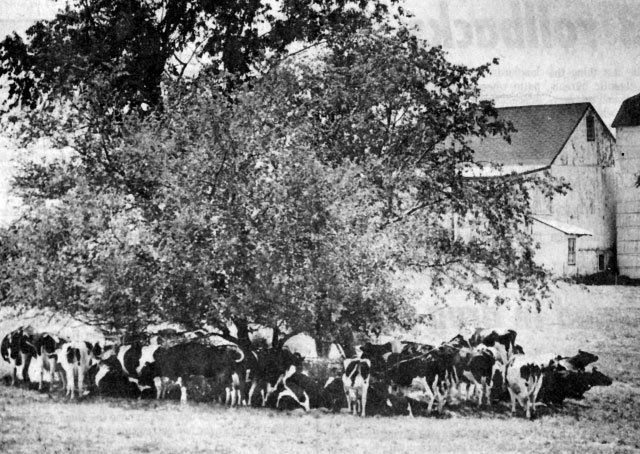
The information for the second photo said, “Below, a herd of cows on the Alderfer farm, off Orvilla Road, Towamencin, looks for shade, rather than a drink, on a hot afternoon.”


As an additional note, a brief story that ran with the photos noted:
“High pressure will remain stationary over the southeastern United States and Pennsylvania will continue to swelter in the continuing hot, humid and increasingly stagnant air mass over this part of the country.”
Hmmmm.
Some things never change, do they?

Monday, July 21, 2008

A church anniversary

Christ Covenant Church on Sumneytown Pike, Kulpsville, which formerly was known as Christ United Church of Christ and, before that, Christ Reformed Church, is readying to celebrate its 175th anniversary.


In light of that, member Mig Robertson has submitted this photo that was printed on March 7, 1949, in The Reporter’s “sister” paper, the Times Herald in Norristown.
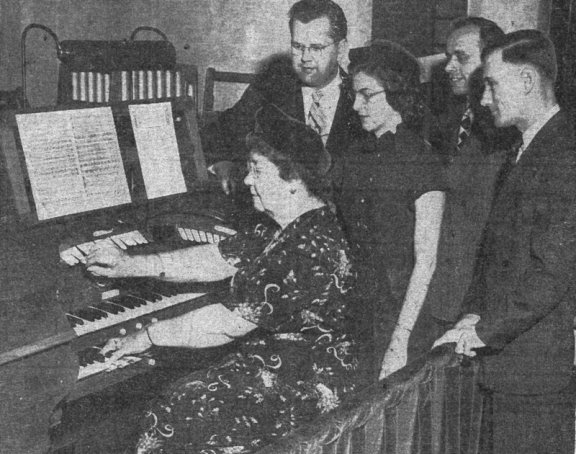
The photo shows Mrs. Harry B. Benner, organist of what was then called Christ Reformed Church, at the console of the church organ, which had been dedicated at a service the day before, after repairs and additions to the instrument.
According to the caption, those watching are, from left, Paul Bartholomew, organist at Trinity Lutheran Church of Lansdale, guest organist during the ceremony; Doris Moyer, the church’s assistant organist; R.M. Moyer, director of music at the church; and Pastor Lester A. Ehret.
According to information supplied by Robertson, the organ was used until the new sanctuary was built in 1965, when a new instrument was purchased.
The organ in the photo, she notes, originally came from a local theater (Souderton or Lansdale, she said).
Robertson also details those in the photo:
“Of the people in the photo, the guest organist is the deceased brother of a current church member, Mary Kemmerer; Doris Moyer, now Loux, is a sister of two current church members, Melba Fluck and Norrell Weisenborn, and Mrs. Loux is the longtime organist at Trinity UCC of Telford. Russell Moyer still resides in the area.”

Monday, July 14, 2008

A rock star and his team


The Sixers may have signed one extremely expensive player, but that guy has nothing on this local hoops team.
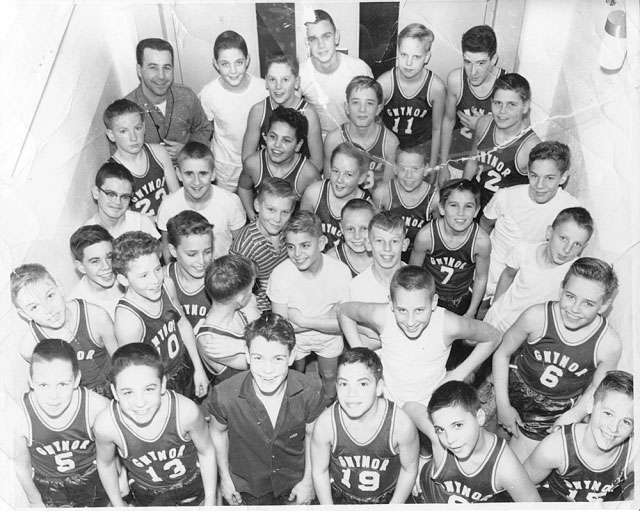
This photo, submitted by Jim Moore of North Wales, was taken in 1959.
Moore says the picture shows a basketball team from North Wales and Upper Gwynedd, and the boys are ages 11 through 13.
And there is a famous player in the group. According to Moore, No. 19 — the youngster shown front and center — is none other than John Oates, of the singing duo Hall & Oates.
The coach for the team was Andy Mazzanti, Moore noted, and the team was sponsored by Merck.
“Some of the names of the players in this photo that I remember are George Brower, Bob Milnes, Daryl Boorse, Russ Camburn, Nevin and Wayne Harper, Dick Holmes, Greg Lacher, Dave and Paul Robison, Tim Weigner, Faris Barnes, Jim Rittenhouse, Bob Mathe, George Gardiner, Dick Reiner, Phil Waldron, Walt Peifer, Tom Penn, Jim Moore, Dave Gerhart, George Arbic and Jim Mazzanti. Maybe some of the readers will recognize the rest,” Moore said.
Well, anyone?

FAQ: Peter Wentz Farmstead

by Walter Ault
WORCESTER - One of the most fascinating places in all of Montgomery County is the Peter Wentz Farmstead, a historical and architectural gem in Worcester Township that those with an interest in local history should visit.
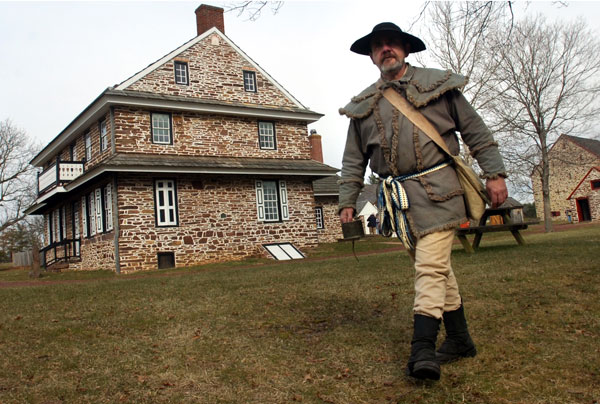
The farmstead is a beautifully preserved German-style farm bordering Skippack Pike, Shearer Road and Zacharias Creek, with the centerpiece being a large two-and-a-half-story stone house built in 1758.
The house is about 80 percent original, according to Morgan McMillan, who has been curator of the site for five years.
Peter Wentz inherited 300 acres from his land-speculator father in 1744 and subsequently began building a house on the plot. The house was completed in 1758 and is in excellent condition despite being 250 years old.
There are also many other, smaller structures on the site - re-creations built on original foundations. There is a barn, a sheep fold, an ice house and a smoke house, a privy and a wood shed, all carefully constructed to give the site an appearance of the late 18th century.
The Wentz family, Peter and his wife Roseanna, lived in the 10-room house until 1784, then sold it to a man named Devault Beiber. Ten years later, Beiber sold the house to Melchiore Schultz, a Schwenkfelder minister.
Schultz and his descendants lived in the house until 1969 when the county bought the property.
The house is intriguing for many reasons: one being that it has elements of both English- and German-style architecture, as McMillan explained. "The façade and floor plan are Georgian (English) style," he said, "with everything being symmetrical.
"The pent roof, the split doors or Dutch doors are German style."
The site is still a working farm, with sheep and horses, the barn and a vegetable and herb garden. There are also plenty of fields, meadows and nature trails for walking.
"The Wentzes were wealthy farmers and their property reflected that," McMillan said. "And the farmstead looks much as it would have back then."
Nevertheless, the house is definitely the main attraction. It is truly beautiful inside and out, with many interesting features.
Standing near the front door, the first floor pent roof is immediately noticeable. It keeps water off the foundation of the house and supports a small, outside balcony. The stonework and fancy window shutters are equally impressive.
Once inside the house, the pine wood floors, some of which are original, stand out. "The front rooms, a parlor and a kind of utility room or family room," McMillan points out, "are more fancy than the others, with more plaster and paint and more decoration."
Even on the second floor, the front rooms are more decorative and elaborate, with, among other things, a corner cupboard in each room.
The walls even have a surprising feature. From the chair rails down to the floors, all the walls are painted in decorative patterns, in accordance with the German style of the 18th century. One small section of the wall has some of the original paint exposed for visitors to examine.
All the rooms are elaborately decorated with period furnishings. Some rooms have fireplaces while others have what are called five plate (cast iron) stoves.
One of the most fascinating rooms is called the Washington bedroom, because that is where it is believed General Washington slept during his stay at the house.
As it turns out, General Washington stayed at the Wentz home in the fall of 1777 (using it as his headquarters) for two days before the Battle of Germantown.
The American troops moved from the farmstead toward Philadelphia, where they encountered the British forces in a battle Oct. 4.
The future president stayed at the house again after the battle.
"The Washington room is the most originally intact room in the house," McMillan said.
The room has some beautiful period furnishings, but what really draws attention are the closets that extend the entire length of one wall from floor to ceiling.
However, the interesting aspects of the house don't end there. The summer kitchen is also worth mentioning. It has a large, original fireplace, with a brick bake oven in one corner.
The summer kitchen, unlike many others at the time, is connected by a breezeway to the main house.
Above the breezeway is a loft now used to house a collection of 18th century tools and contraptions.
"This is a special place," McMillan said. "A lot of care and hard work went into making this place an attractive and interesting site for visitors. And we believe the farmstead's appearance gives visitors a feel that they are traveling back in time to the period of the Revolutionary War."
Montgomery County has owned and operated the farmstead for almost 40 years now, with support from the Peter Wentz Farmstead Society - a nonprofit volunteer group dedicated to the preservation of the site and educating visitors.
"People come here and are amazed at how beautiful this property is," McMillan said. "And they love the house and its rich history."